
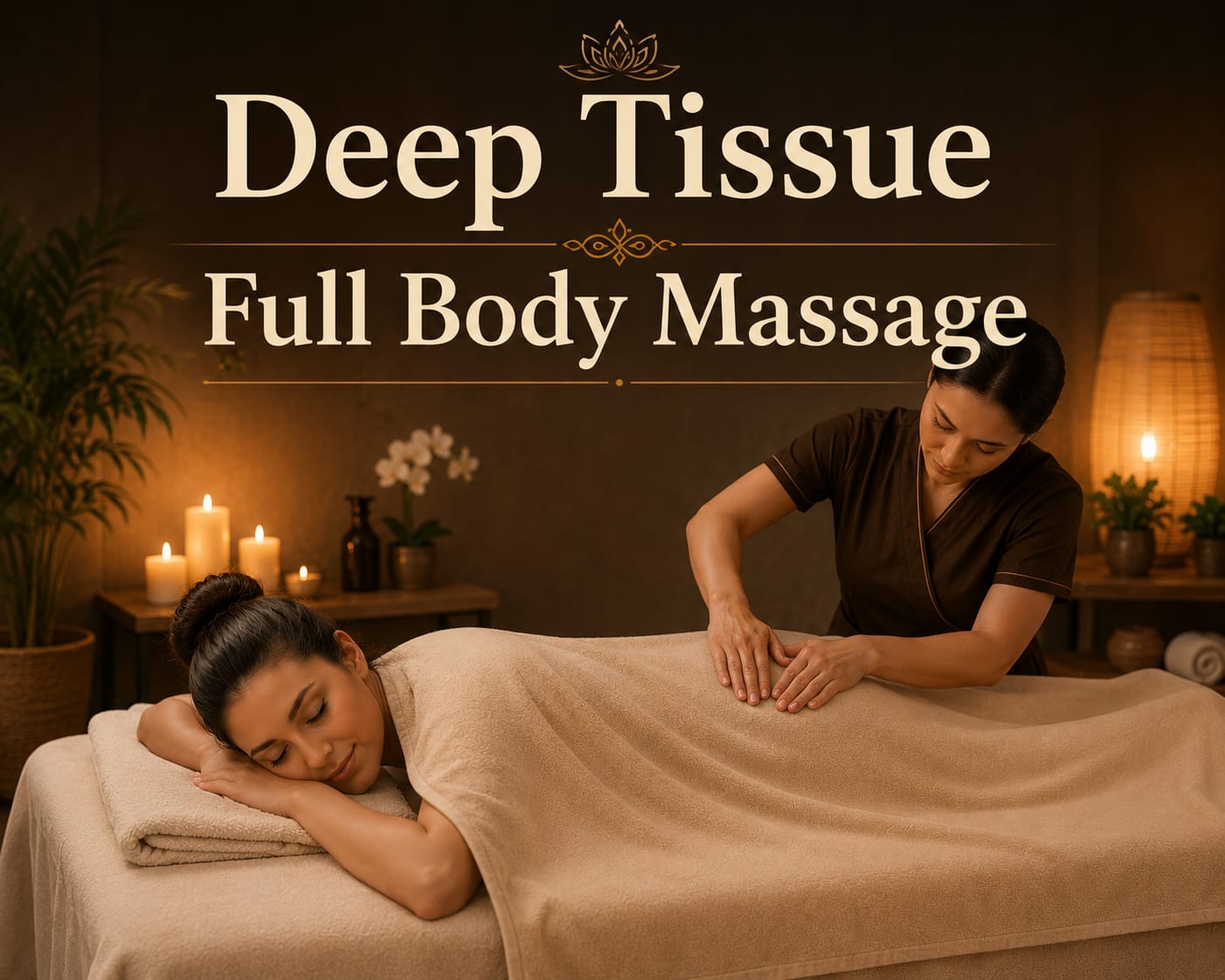
Deep tissue full body massage
Place: Faridabad
Radius: 50 km
About This Service
A Deep Tissue Massage focuses on deeper layers of muscles and connective tissues. It uses slower strokes and stronger pressure than Swedish massage to help with muscle tightness, stiffness, and body pain.
Steps of a Full Body Deep Tissue Massage
Consultation
Therapist asks about pain areas, injuries, or muscle tension.
Warm-Up
Light strokes are used first to warm up muscles before deeper pressure.
Back Massage
Deep pressure is applied using fingers, thumbs, knuckles, elbows, or forearms.
Focus on knots, stiffness, and tight muscles.
Shoulders and Neck
Slow deep movements help release stress and tension buildup.
Arms and Hands
Pressure is applied to tight muscles and joints.
Legs and Glutes
Deep kneading and pressure work on thighs, calves, and hips to reduce soreness and tightness.
Feet
Pressure techniques relax foot muscles and improve circulation.
Stretching (Optional)
Gentle stretches may be included to improve flexibility.
Cool Down
Lighter strokes calm the muscles and relax the body.
Common Techniques
Slow deep strokes
Trigger point pressure
Cross-fiber friction
Muscle stripping
Deep kneading
Benefits
Relieves muscle pain and stiffness
Helps with sports recovery
Improves mobility and posture
Reduces chronic tension and stress
It’s normal to feel mild soreness for a day after a deep tissue massage, so drinking water and resting can help.
beauty services
A Deep Tissue Massage focuses on deeper layers of muscles and connective tissues. It uses slower strokes and stronger pressure than Swedish massage to help with muscle tightness, stiffness, and body pain.
Steps of a Full Body Deep Tissue Massage
Consultation
Therapist asks about pain areas, injuries, or muscle tension.
Warm-Up
Light strokes are used first to warm up muscles before deeper pressure.
Back Massage
Deep pressure is applied using fingers, thumbs, knuckles, elbows, or forearms.
Focus on knots, stiffness, and tight muscles.
Shoulders and Neck
Slow deep movements help release stress and tension buildup.
Arms and Hands
Pressure is applied to tight muscles and joints.
Legs and Glutes
Deep kneading and pressure work on thighs, calves, and hips to reduce soreness and tightness.
Feet
Pressure techniques relax foot muscles and improve circulation.
Stretching (Optional)
Gentle stretches may be included to improve flexibility.
Cool Down
Lighter strokes calm the muscles and relax the body.
Common Techniques
Slow deep strokes
Trigger point pressure
Cross-fiber friction
Muscle stripping
Deep kneading
Benefits
Relieves muscle pain and stiffness
Helps with sports recovery
Improves mobility and posture
Reduces chronic tension and stress
It’s normal to feel mild soreness for a day after a deep tissue massage, so drinking water and resting can help.
Body Massage
A Deep Tissue Massage focuses on deeper layers of muscles and connective tissues. It uses slower strokes and stronger pressure than Swedish massage to help with muscle tightness, stiffness, and body pain.
Steps of a Full Body Deep Tissue Massage
Consultation
Therapist asks about pain areas, injuries, or muscle tension.
Warm-Up
Light strokes are used first to warm up muscles before deeper pressure.
Back Massage
Deep pressure is applied using fingers, thumbs, knuckles, elbows, or forearms.
Focus on knots, stiffness, and tight muscles.
Shoulders and Neck
Slow deep movements help release stress and tension buildup.
Arms and Hands
Pressure is applied to tight muscles and joints.
Legs and Glutes
Deep kneading and pressure work on thighs, calves, and hips to reduce soreness and tightness.
Feet
Pressure techniques relax foot muscles and improve circulation.
Stretching (Optional)
Gentle stretches may be included to improve flexibility.
Cool Down
Lighter strokes calm the muscles and relax the body.
Common Techniques
Slow deep strokes
Trigger point pressure
Cross-fiber friction
Muscle stripping
Deep kneading
Benefits
Relieves muscle pain and stiffness
Helps with sports recovery
Improves mobility and posture
Reduces chronic tension and stress
It’s normal to feel mild soreness for a day after a deep tissue massage, so drinking water and resting can help.